How to Source Bags and Pouches from China
Bags and pouches are versatile promotional and retail categories, but they are also highly detail-sensitive. Small production decisions can significantly affect both appearance and cost. That is why buyers sourcing bags and pouches from China should focus on construction details early, not only after samples arrive.
The first issue is material clarity. Terms like canvas, polyester, nylon, PU, and cotton may sound straightforward, but actual thickness, hand feel, weave density, and finish can vary widely. Two suppliers can quote the “same” material while offering noticeably different performance. Buyers should define not just material type, but also weight, finish, lining expectations, and any relevant hardware or trim requirements.
Construction is equally important. Stitching density, seam reinforcement, zipper quality, edge finishing, strap attachment, and handle strength all affect durability and perceived quality. A pouch used as a simple event giveaway may tolerate a lighter construction. A bag intended for retail or premium gifting usually cannot. The factory must understand how the product will be used, not just what it looks like in a drawing.
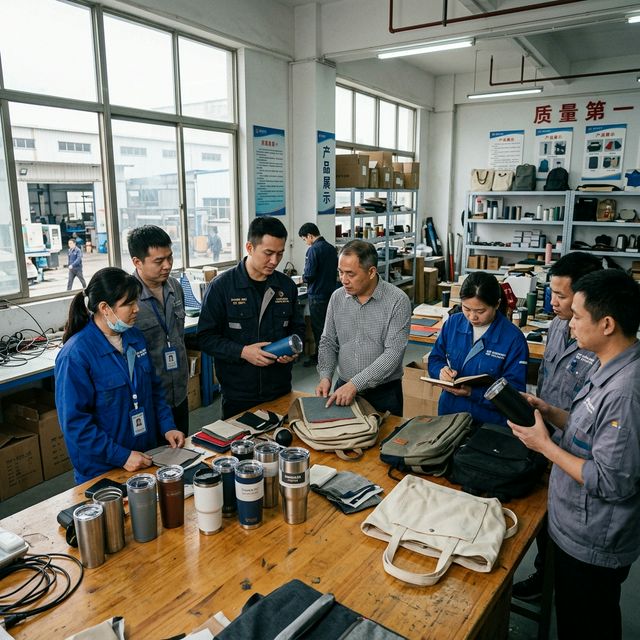
Sampling is critical in this category. Photos often hide problems that become obvious in hand: poor shape retention, weak zippers, uneven stitching, thin fabric, or poor internal finishing. Buyers should review not only the exterior branding but also the inside construction, edge treatment, and overall balance of the product. Good bags feel intentional. Poor ones feel rushed.
Decoration methods should also be chosen carefully. Screen print, embroidery, woven labels, heat transfer, embossing, and patch application each create different visual and cost outcomes. The best option depends on fabric type, design complexity, and target price point. A method that looks impressive in a design mockup may not suit the fabric or production volume efficiently.
Packaging and folding strategy should be discussed early. Bags and pouches often need carton-efficient packing, shape protection, barcode labels, or retail-ready inserts depending on the sales channel. Products that are not packed well can arrive with wrinkles, deformation, or damaged branding, which creates avoidable quality complaints.
China remains a strong sourcing base for bags and pouches because of its material access, manufacturing experience, and customization range. But strong results come from disciplined product definition, realistic sample review, and close control over construction details. In this category, quality is built into the seams—not added later through branding.